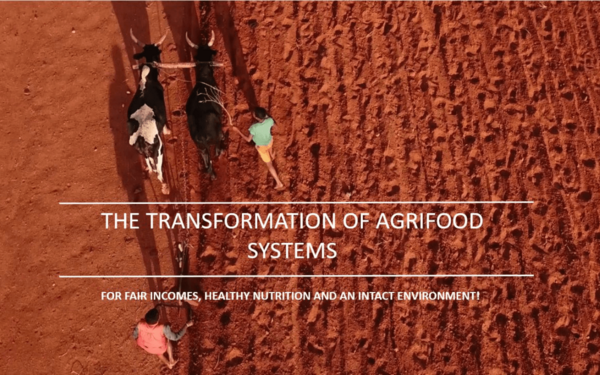
How can agricultural and food systems be transformed in a sustainable way?
A big question, an ambitious goal. And yet, transformation can succeed. This website brings different actors together who are working towards this goal.
A Contribution by the Federal Ministry for Economic Cooperation and Development
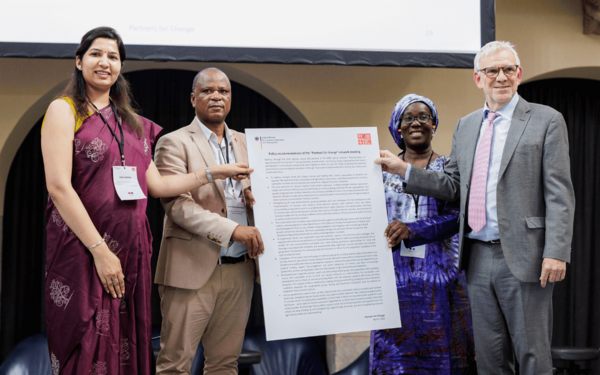
At the network meeting "Partners for change - Transformation to a food secure, resilient and sustainable future", almost 250 participants from over 20 countries came together to exchange experiences and ideas on the transformation of agricultural and food systems. The final product, joint recommendations to transform agricultural and food systems, can now be read online.
Halfway through the 2030 Agenda, the BMZ invited participants to a network meeting entitled "Partners for change - Transformation to a food secure, resilient and sustainable future". Experts from around the world developed recommendations in a consultation process and then consolidated them in Berlin. A site visit.
Experts from Burkina Faso, Cambodia, Ethiopia, India, Kenya and Malawi came together to discuss inclusive governance in a workshop entitled "Inclusive Governance of Food Systems Transformation". Daniel Montas, TMG Research, on the findings.
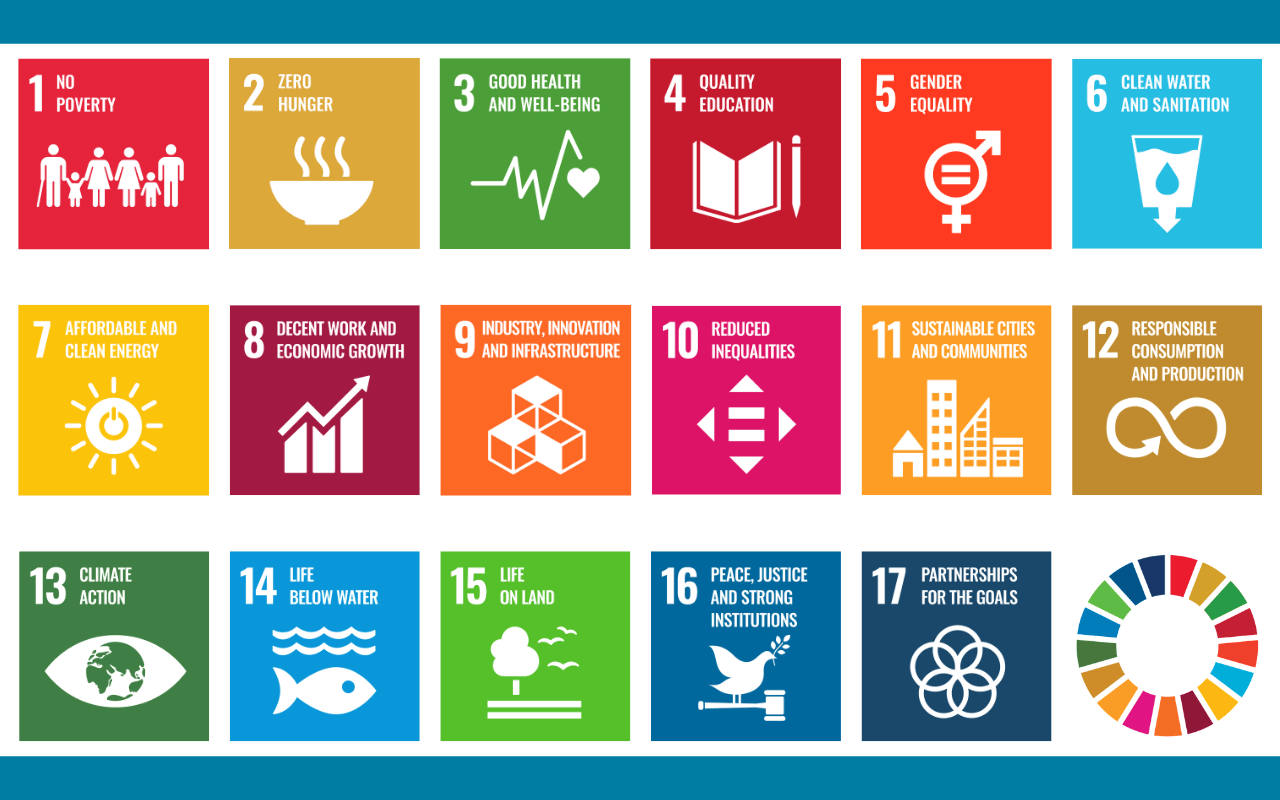
In 2023 the world is at halftime in the implementation of the 2030 Agenda and its Sustainable Development Goals (SDGs). On current trends, one thing becomes clear: We’re at halftime but nowhere near halfway. In the face of global crises and geopolitical conflicts, the path to sustainability has recently even been backward. Still, there are seven years left to turn the tide. Time to ask ourselves: so far, what has been achieved and what needs to happen to ensure that the SDGs can be kept?
This year's United Nations World Drug Report highlights for the first time the nexus between illicit drugs and the environment. In view of climate change, it is time to feed the debate with facts and make drug policy greener
A Contribution by Adrian Muller, Catherine Pfeifer and Jürn Sanders (FiBL)
Taking Biodiversity Focus Areas under production or abandoning lower yielding, more extensive production systems is the wrong approach to mastering the looming global food crisis, say the authors of the Research Institute of Organic Agriculture (FiBL).
Small farmers often have a hard time getting financing. An app in Nigeria wants to change that: Founder Blessing Mene about what his app offers - and about the opportunities and limitations of agricultural financing.
A new study on the digitalisation of agriculture puts farmers back at the centre of their own sector, identifies market gaps and gives recommendations on how to support relevant actors.
Four interviews kick off the relaunch under the new name „Food4Transformation“, asking the same questions from different perspectives. Dirk Meyer, Federal Ministry for Economic Cooperation and Development, thinks: less individual solutions are needed, but more systemic approaches. Because in addition to the goals for food security, the issues of climate and biodiversity must also be taken into account.
Four interviews kick off the relaunch under the new name „Food4Transformation“, asking the same questions from different perspectives. Dr Julia Köhn, Chair of the German AgriFood Society, points out in the interview: Only if innovation and transformation are profitable in the medium term can they close the food gap in the long term.
When women have control over the resources of a household and manage the income, it usually leads to a more balanced and healthier diet for the family. But often the decision-making power lies with the men. How can this gender inequality be addressed? The GIZ global project Food Security and Resilience provides insights into project work on gender-transformative approaches finances by the Federal Ministry for Economic Cooperation and Development (BMZ).
Three female entrepreneurs from Mozambique, Sri Lanka and Uganda tell their stories about starting organic businesses from scratch, now selling Baobab Oil, Gotukola powder and Shea butter in international markets. And they explain why their business is almost 100 percent female.
By processing chilli peppers, Black Mamba wants to give something back to the rural population. In a short portrait, Sandisiwe Dlamini, Food Safety Officer, reveals how.
Priscilla Impraim is one of the first women in Ghana to enter the chocolate business. Despite some hurdles, she founded the company Ab Ovo Confectionery Limited in 2006 with currently six permanent employees and 25 seasonal employees.
The Federal Ministry for Economic Cooperation and Development (BMZ) has released a video on the transformation of agricultural and food systems. In the video, Federal Minister Svenja Schulze also speaks about the urgent need to combat global hunger and contribute to resilient agricultural and food systems.
A contribution by William Onura and Larissa Stiem-Bhatia
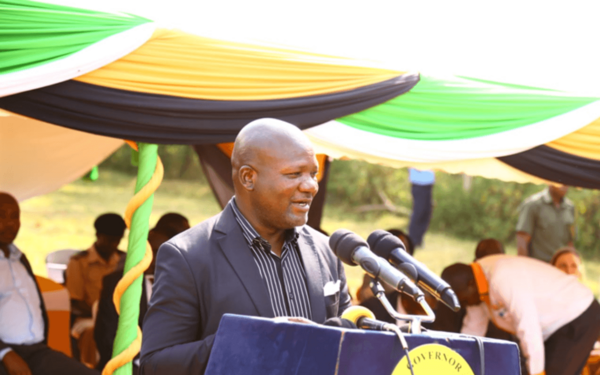
In agriculture it is important to include political stakeholders in the discourse. To build the bridge between practical application and political action, the think tank TMG launched the Governor's Day with Farmers in Kakamega County, Kenya. Now it took place for the second time. But what are the goals and benefits of the Governor's Day?
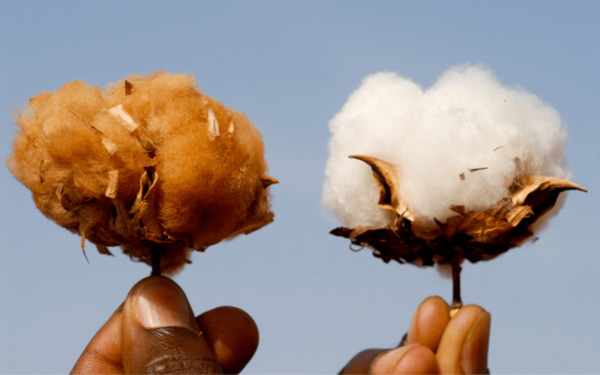
Organic cotton is extremely popular – but farmers still find it difficult to change their conventional cultivation methods. A new project addresses this dilemma: Bundesliga football teams in Germany are promoting the switch to organic cotton in India. And thereby setting an example.
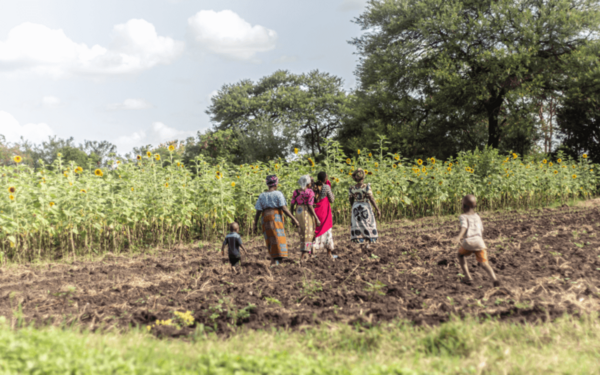
Kenya is a large importer of vetable oils mainly from Indonesia and Malaysia - amongst them sunflower oil. Due to the Russian war of aggression against Ukraine, there were supply bottlenecks and food shortages, leading to less affordable vegetable oils in Kenya. As a response to the lack of supply, the Sanga'alo Institute of Science and Technology, took that impulse, teamed up with the GIZ and established regional cultivation and refinement of sunflowers.
The battle against hunger can only be won if civil society, science, business, and politics are willing to augment their expertise and learn mutually from experience. There are different approaches and ideas on how to achieve the aim of 2030 Agenda to end hunger – we report on these.
We use cookies on our website. Some of them are essential, while others help to improve your user experience. Your consent is voluntary and can be revoked at any time on the "Privacy" page.
Protects against cross-site request forgery attacks
Retention period: This cookie remains only for the current browser session.
Saves the current PHP session.
Retention period: This cookie remains only for the current browser session.
Content from third-party providers, such as YouTube, which collect data about usage. Third-party content embedded on this website will only be displayed to you if you expressly agree to this here.
Provider: Google Ireland Ltd., Gordon House, Barrow Street, Dublin 4, Ireland
Retention period: Here you can learn more about the storage period of the cookie: https://policies.google.com/privacy.
Provider: Vimeo, Inc. / 555 West 18th Street New York, New York 10011, USA
Retention period: Here you can learn more about the storage period of the cookie: https://vimeo.com/privacy.
We use Matomo analytics software, which collects anonymous data about website usage and functionality to improve our website and user experience.